


Most Popular Solar Generators
EcoFlow DELTA Pro 3 Solar Generator

EcoFlow DELTA Pro Solar Generator

EcoFlow DELTA 3 Ultra Plus Solar Generator (3072Wh)

EcoFlow DELTA 3 Max Solar Generator

EcoFlow DELTA 3 Classic Solar Generator

EcoFlow DELTA 3 Max Plus Solar Generator

EcoFlow DELTA 3 Ultra Solar Generator (3072Wh)

EcoFlow DELTA Pro Ultra X Solar Generator

EcoFlow DELTA Pro Ultra Solar Generator

EcoFlow DELTA 2 Max Solar Generator

EcoFlow DELTA 3 Plus Solar Generator


How Does a Solar Generator Work?
After collecting and storing DC (direct current) energy, the solar generator converts DC into AC
(alternating current) electricity that can power appliancesboth indoors and out.

Why Choose an EcoFlow
Solar Generator?


DELTA Pro Ultra Solar Generator (2 × 400W Solar Panel)
The Most Powerful Whole-home Backup Solution
Solar Input: 5600W (dual ports)
Capacity: 6144Wh (30kWh expandable)
Output: 7200W (surge 10800W)
Fully Charged in: 2.4 hr

DELTA Pro 3 Solar Generator (400W Solar Panel)
The Most Portable Whole-home
Backup Power
Solar Input: 2600W (dual ports)
Capacity: 4096Wh (12kWh expandable)
Output: 4000W (surge 8000W)
Fully Charged in: 3.4 hr
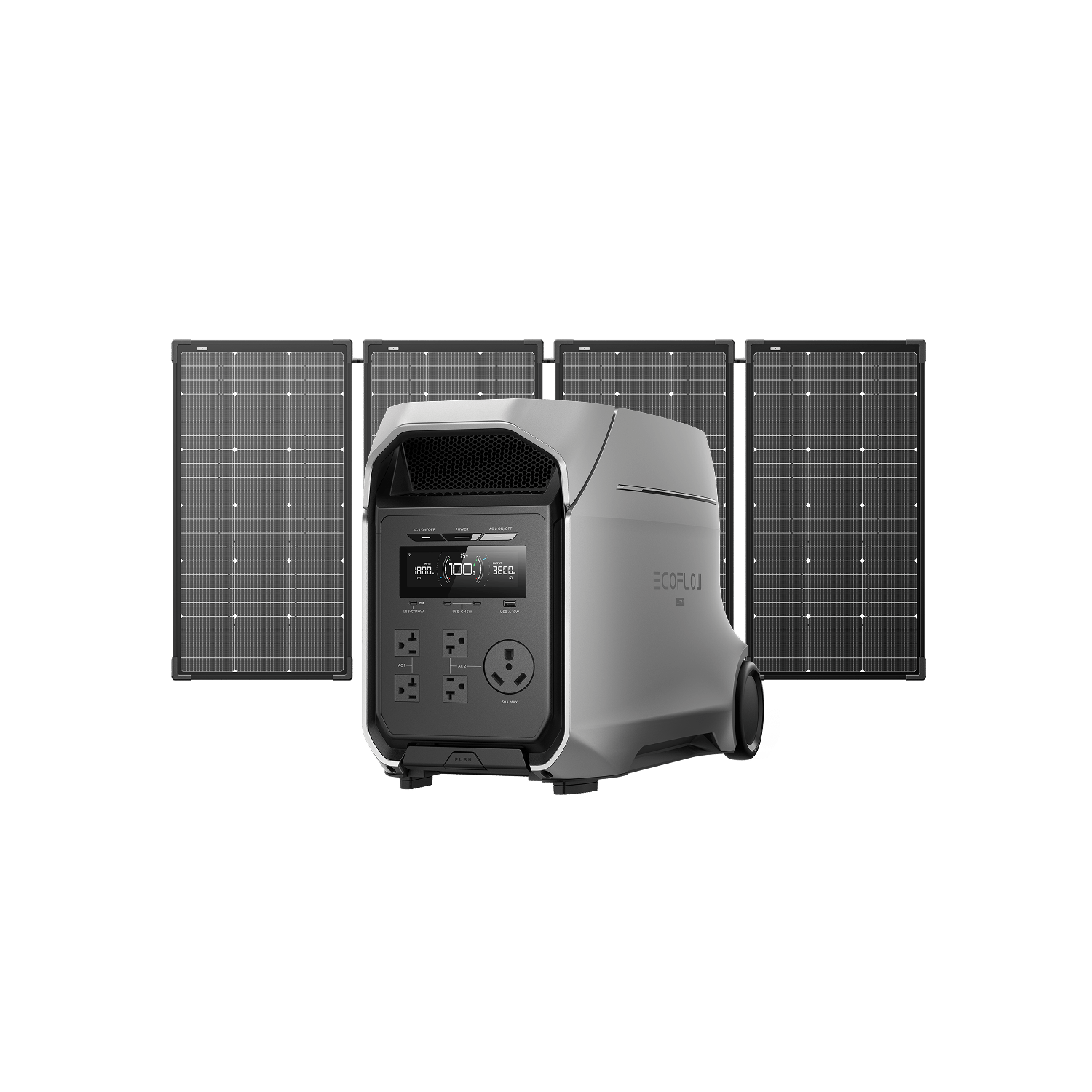
DELTA 3 Ultra Plus Solar Generator (500W Solar Kit)
Stay Powered at Home and on the Go
Solar Input: 1600W (dual ports)
Capacity: 3072Wh (11kWh expandable)
Output: 3600W (surge 7200W)
Fully Charged in: 2.4 hr

DELTA Pro Ultra X Solar Generator (4 × 400W Solar Panel)
Essential Power for Home Backup & RV Life
Solar Input: 10kW (dual ports)
Capacity: 12kWh (61kWh expandable)
Output: 12kW
80% Charged in: ~1 hr

DELTA Pro Solar Generator (2 × 220W Solar Panel)
Your portable solar solution for whole-home backup
Solar Input: 1600W
Capacity: 3600Wh (10.8kWh expandable)
Output: 3600W (surge 7200W)
Fully Charged in: 3 hr

DELTA 3 Ultra Solar Generator (2 × 220W Solar Panel)
Max Power with Solar Charging, From Homes to RVs
Solar Input: 800W
Capacity: 3072Wh
Output: 3600W (surge 4600W)
0-80% Charged in: 3.37 hrs
*Note: The fastest full charge time is estimated based on the maximum input of the solar panel(s) recommended for purchase in the product portfolio.


DELTA 3 Max Plus Solar Generator (500W Solar Kit)
Max Power with Solar Charging, From Homes to RVs
Solar Input: 1000W (dual ports)
Capacity: 2048Wh
Output: 3000W (surge 6000W)
0-80% Charged in: 96 Mins

DELTA 3 Max Solar Generator (400W Solar Panel)
Max Power with Solar Charging, From Homes to RVs
Solar Input: 500W
Capacity: 2048Wh
Output: 2400W (surge 4800W)
0-80% Charged in: 3.43 hrs

DELTA 3 Plus Solar Generator (PV 220W)
Stay Powered at Home and on the Go
Solar Input: 1000W (dual ports)
Capacity: 1024Wh (5kWh expandable)
Output: 1800W (surge 3600W)
Fully Charged in: 1.5 hr

DELTA 3 Classic Solar Generator (160W Solar Panel)
Essential Power for Home Backup & RV Life
Solar Input: 500W
Capacity: 1024Wh (3kWh expandable)
Output: 1800W (surge 3600W)
Fully Charged in: 2.6 hr
DELTA 2 Solar Generator (PV 220W)
Essential Power for Home Backup & RV Life
Solar Input: 500W
Capacity:
1024Wh
Output: 1800W (Surge 2700W)
Fully Charged in: 2.6 hr
RIVER 3 Max Plus Solar Generator (PV 220W)
Gear Up for Your Next Road Trip
Solar Input: 220W
Capacity: 858Wh
Output: 600W
(surge 1200W)
Fully Charged in: 1.5 hr


“Utilizing the EcoFlow DELTA 3 Plus, extra battery, and a 220-watt solar panel, I will be ice fishing today and enjoying a lunch of chicken, broccoli, and rice, with enough battery life to power a small plug-in heater.”


“The EcoFlow RIVER series is a line of portable power stations designed to provide reliable, off-grid power for various devices, from camping trips to emergency backup. Throughout its journey, the RIVER series has been recognized for its user-friendly design, fast charging times (thanks to EcoFlow's X-Stream technology), and its innovative approach to portable energy storage...EcoFlow changed the way I live.”


“One of my cats appreciates my RIVER tower.”


“I am in Western NC and we were hit hard by the storm! Glad I got my DELTA Max and DELTA 2 a few months ago. The combination of solar and being able to charge them with a gas generator made all the difference! I had neighbors who were only able to run their gas generators for a day or two. I had no trouble going four days until I got power back.”


“I have an EcoFlow DELTA 2 Max battery pack 2kW in addition to two RIVER 2 Pros. I use it for djing outdoor events and camping. Plus it can charge my Tesla. Not very fast. Not very efficient. But it can in an emergency.”


Frequently Asked Questions
Are Solar Generators Worth It?
Whether you’re concerned about home energy security, need reliable off-grid portable power, or are looking to save money on electricity bills, EcoFlow solar generators can provide enough electricity for a road trip or run your whole home. EcoFlow RIVER 3 Plus provides UPS backup for computers in your home office and is compact enough to fit in your backpack. EcoFlow DELTA Pro 3 and DELTA Pro Ultra provide enough AC output, battery storage capacity, and solar panel input to power almost any home. EcoFlow’s whole-home backup generators offer multiple options for generating and storing electricity, including solar panels, gas, propane, or inverter generators, household (AC) power, 800W alternator charging, and more. Once you achieve solar payback, money saved on bills is money earned. Because there are no ongoing fuel costs, solar or gas generators offer very different ROI profiles—solar generators typically provide much better returns over the mid-to-long term.
How Is Electricity Generated from Solar Energy?
All solar panels or other PV modules that generate electricity from sunlight use the photovoltaic (PV) effect. Today, over 90% of solar panels are made with multiple polycrystalline or monocrystalline photovoltaic cells, which harvest photons from visible light and convert solar energy into DC electricity. In grid-connected solar power systems, a solar inverter converts DC into AC (household) electricity for immediate consumption or transmission to the utility grid. Off-grid and hybrid solar systems — like EcoFlow DELTA Pro 3 — direct DC power from PV modules through a charge controller for storage in a solar battery, and the inverter converts DC to AC for immediate use.
Are Solar Generators Safe?
Solar generators are safe, especially compared to traditional fossil fuel generators. They don't emit deadly gases like carbon monoxide or use flammable fossil fuels to generate power. Solar generators use the photovoltaic panels to absorb sunlight and convert the energy into DC electricity. The DC power is stored in a state-of-the-art battery and converted to AC (household) electricity on-demand for immediate use. Unlike gas generators, you can operate solar generators inside your home. Since they’re whisper quiet, you can even run one in a bedroom, and it won’t disturb your sleep.
How Does a Solar Generator Work?
A solar generator is an all-in-one solution for storing the electricity generated by PV modules like portable or mountable solar panels. For example, EcoFlow DELTA series solar generators have all of the necessary balance of system components for residential solar power built in, including a charge controller, solar inverter, solar battery, and advanced battery management system. Off-grid and hybrid solar systems require the above components to operate. On-grid solar panel systems only require a solar inverter, but grid-tied solar panel systems don’t work during blackouts. They shut down automatically and remain offline for the duration of any power outage.
Can a Solar Generator Power a House?
Yes. A whole-home solar generator like EcoFlow DELTA Pro Ultra offers enough AC output and modular storage to power almost any home during extended power outages. With up to 90kWh of LFP battery storage, 21.6kW of AC output, and a maximum solar charge input of 16.8kW, you have the option to live completely off-grid indefinitely. To determine what size solar generator you need to run your home, calculate the total energy usage requirements of appliances you want to operate simultaneously. Don’t forget to factor in starting watts (surge power) — a requirement for starting many large appliances. Next, determine your battery storage capacity (kWh) and electricity generation goals, factoring in peak sunlight at your location. As long as the AC output and storage capacity are sufficient to meet your household needs, a solar generator and PV modules with a combined rated power wattagethat’s enough to keep the solar battery charged can power your whole home.
What Size Solar Generator Can Run Your AC?
When sizing a solar generator to run your ac, or other motor-driven appliances like fridges and freezers, there are two key factors to consider: starting wattage and running wattage. Fortunately, EcoFlow’s solar generators — like DELTA Pro 3 — deliver up to twice their AC output as surge power, making it easy to start air conditioners and other large appliances. DELTA Pro 3 offers 4000W of continuous AC output, 6000W with X-Boost, and 8000W starting watts — more than enough to run an AC unit, refrigerator, and multiple high-wattage appliances at the same time. Thanks to its proprietary X-Boost technology, it can power up to 6000W of appliances simultaneously — 50% above its continuous output.
Solar or Gas Generators? What’s Better for Home Backup Power?
If you live in a location that receives more than 3 or 4 hours per day of peak sunlight, a solar generator likely beats a gas generator for home by every metric except price. Despite the higher upfront investment, solar generators have no ongoing fuel or maintenance costs. Once you achieve solar payback, you start making money by saving on electricity bills. Solar generators also offer up to double the starting power of gas generators, making them ideal for high-wattage appliances. Over the mid-to-long term, solar generators offer a much better return on investment than gas. Additionally, incentives like the Federal Solar Tax Credit can save US taxpayers 30% on the total purchase and installation costs of an eligible system, like EcoFlow DELTA Pro 3 or DELTA Pro Ultra.
What Size Solar Generator Should I Get?
Solar generators come in all shapes and sizes. You can take an EcoFlow RIVER Series solar generator and 125W bifacial modular solar panel backpacking or use one of the EcoFlow DELTA Pro series for whole-home backup. Size may refer to the dimensions and weight of the product — essential considerations for portability — or AC output (watts/kilowatts) and battery storage capacity (watt-hours/kilowatt-hours). Carefully consider your use case and how much power vs. portability you need. EcoFlow has a wide selection of portable power stations and solar generators to meet almost any need — from backpacking to powering an entire home off-grid.

